
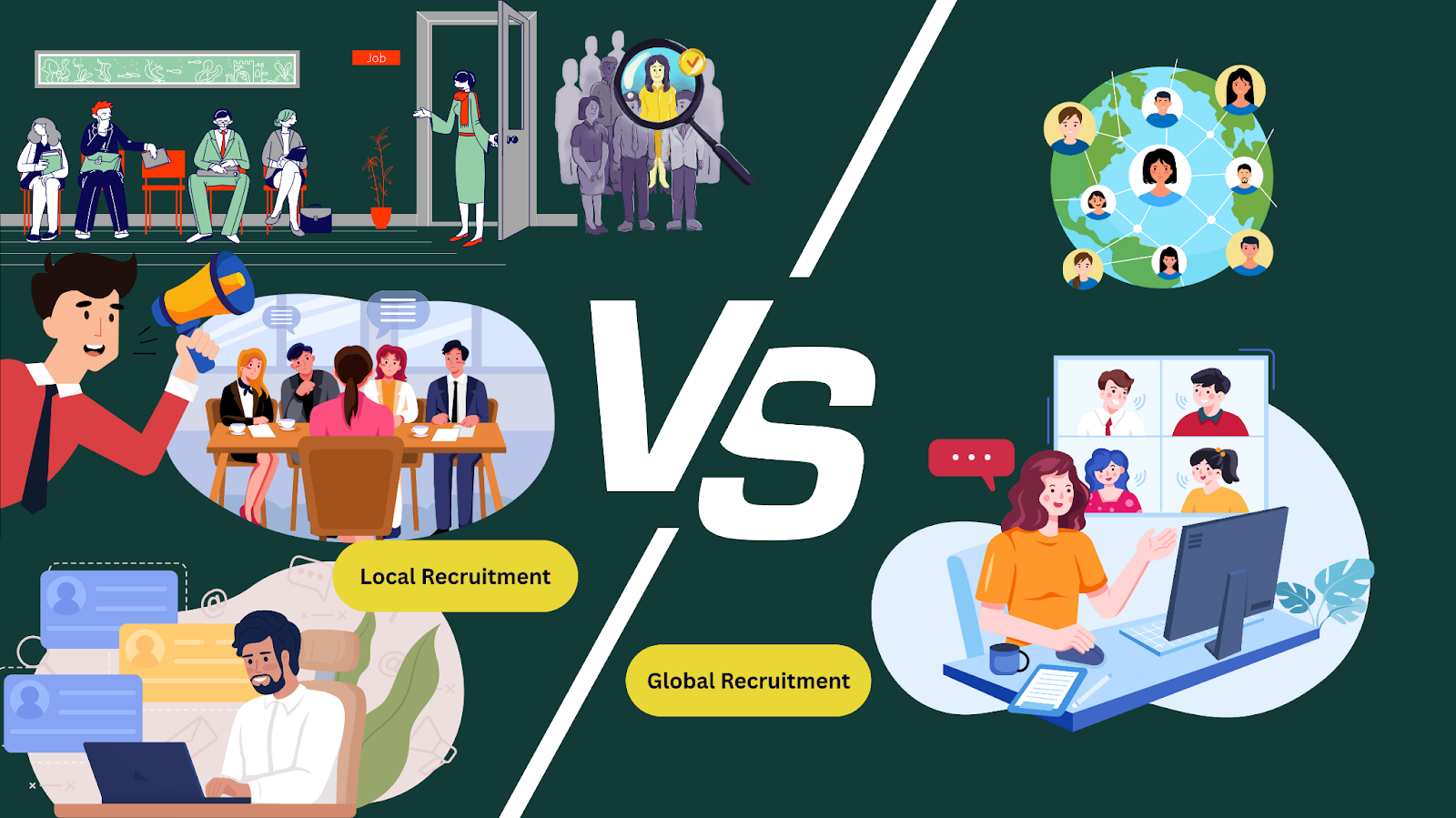
The Old Game Is Over
Picture this. It’s 2015. A startup founder in San Francisco wants to scale quickly. What does she do? She spends months headhunting engineers in Silicon Valley, offering fancy salaries, free kombucha, and bean bags that nobody really sits on. That was the dream: build the “best team” by squeezing everyone into the same expensive office.
Fast-forward to 2025. The world looks very different. Offices are half-empty, the kombucha tap is dusty, and that same founder is now hiring her lead developer from Dhaka, her UX designer from Lagos, and her data scientist from Kraków. And she’s doing it not because it’s cheaper—though it definitely is—but because it’s smarter.
So, why are global companies rushing toward offshore talent pools in 2025? Let’s break it down.
1. The Myth of Local Hiring Is Crumbling
For decades, companies were told: “Hire local, build culture, keep the team close.” It sounded nice. But the reality?
- It’s painfully expensive: Salaries in big tech hubs have skyrocketed. Add in benefits, office rent, taxes—suddenly, one senior hire costs more than your entire marketing budget.
- It’s painfully slow: On average, it takes 6–8 months to fill a specialized tech role in major cities. In today’s hyper-competitive market, that’s like running a marathon in flip-flops.
- It’s painfully limiting: By insisting on local hires, companies lock themselves out of 90% of the world’s talent. Imagine needing an AI engineer and ignoring brilliant candidates in Bangladesh or Vietnam just because they don’t live within commuting distance of your HQ.
In 2025, companies finally admit it: local hiring isn’t a competitive advantage anymore—it’s a bottleneck.
2. Offshore Talent Isn’t Just Cheaper—It’s Better
Let’s kill a myth right here. Offshore talent doesn’t mean “cheap labor” anymore. That’s an outdated stereotype.
In reality:
- You get world-class expertise. The best blockchain dev you’ll ever meet might be sitting in Nairobi. The sharpest growth marketer might be sipping coffee in Dhaka.
- You get round-the-clock productivity. While your U.S. team logs off, your offshore crew logs in. Deadlines shrink, projects accelerate. Work literally never sleeps.
- You get fresh perspectives. Global teams bring global ideas. A product built by diverse minds resonates with diverse customers.
Companies aren’t looking offshore just to cut costs—they’re looking offshore to level up.
3. The Global Talent War Has a New Battlefield
Once upon a time, the talent war was fought inside tech campuses. Apple poached from Google, Google poached from Facebook, Facebook poached from… well, everyone. It was a circle of inflated salaries and endless bidding wars.
But now? The battlefield has gone global.
Remote collaboration tools (Slack, Clink up, Asana, Notion, Zoom—you name it) have matured. Payment platforms make international transactions seamless. Governments are adapting policies for digital nomads and remote workers. Suddenly, there’s no excuse not to build a distributed team.
Think about it: do you want to fight over the same handful of local resumes—or open the door to an entire planet of talent?
4. Real Stories: Why It Works
- The Startup Hustle
A fintech startup in London needed to build a mobile app in six months. Hiring locally would’ve taken them a year (and bankrupted them). Instead, they assembled a dream team of engineers from Bangladesh and product designers from Brazil. The app launched on time—and their investors were blown away. - The Creative Agency
A boutique ad agency in Sydney tapped into offshore video editors and animators. What used to take 3 weeks for a campaign now takes 7 days. Clients don’t ask “where’s your team located?”—they ask “how are you this fast?” - The Tech Giant
Even Fortune 500s are catching on. Major players are shifting entire functions offshore—not as outsourcing, but as core strategy. Their secret? They don’t just treat offshore hires as “vendors.” They treat them as equals.

5. The Elephant in the Room: Risks
Of course, going offshore isn’t rainbows and unicorns. There are risks:
- Communication hiccups. Different time zones mean delays if you’re not disciplined.
- Quality concerns. Not every freelancer on the internet is who they claim to be.
- Cultural gaps. What feels like “direct feedback” in New York might feel like “rude criticism” in Jakarta.
But here’s the twist: the risks are manageable. Smart companies set overlapping hours, use probation contracts, and invest in cross-cultural training. Treat offshore talent as real teammates—and the so-called “risks” fade into noise.
6. The New Playbook: Talent Everywhere, Execution Everywhere
2025 marks a turning point. Companies have realized:
- Talent isn’t bound by geography. It’s everywhere.
- Execution isn’t bound by time zones. It’s always on.
- The best teams are borderless. They combine expertise, diversity, and agility in ways the old office model never could.
Offshore talent pools aren’t a “trend.” They’re the future operating system for global business.
Final Thought
The big question in 2025 isn’t “Should we go offshore?” It’s “Can we afford not to?”
Because the companies that cling to old hiring models will drown in cost, slowness, and scarcity. The ones that embrace offshore talent? They’ll run leaner, move faster, and innovate wider.
The future of work isn’t coming—it’s already here. And it doesn’t care about your office zip code.