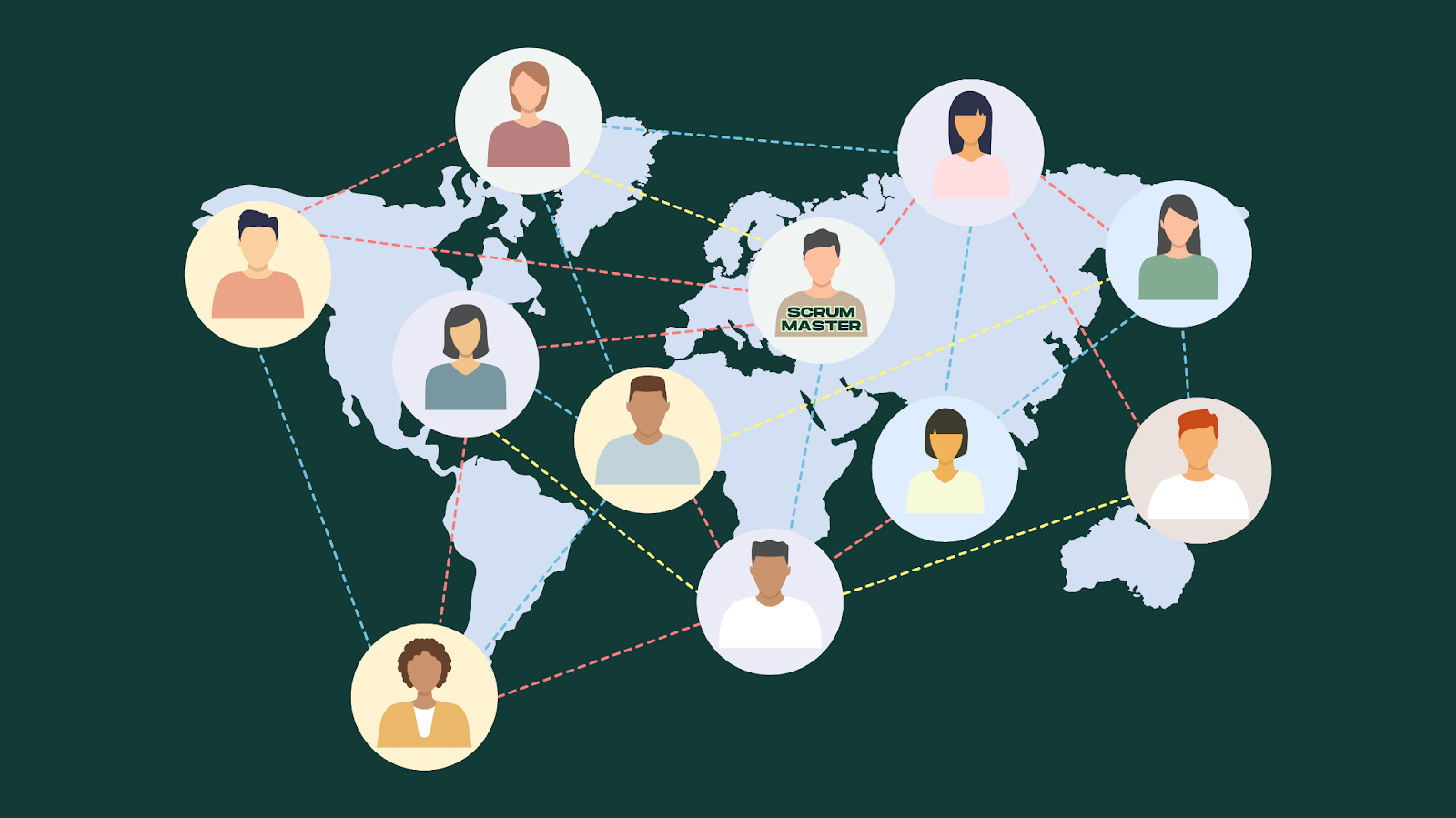
The World’s Biggest Office Has No Walls
Here’s a fun fact: GitLab, a company valued at billions, has over 1,500 employees in 65+ countries—and not a single physical office. Automattic (the folks behind WordPress) runs with more than 2,000 people scattered across 100+ countries. Zapier? Same story.
So how do these companies—spread across every timezone and culture imaginable—actually work together without losing their minds?
The answer is simple but not easy: they’ve learned how to overcome communication barriers in offshore teams.
Because if you don’t? Misunderstandings, delays, and frustration will eat away at productivity faster than a 2 a.m. Slack notification.
1. Why Communication Feels Harder Offshore
Imagine this:
- You send a message at 9 a.m. in New York. It’s already 7 p.m. in Dhaka.
- Your colleague says “yes,” but really means “I’ll try.”
- A quick brainstorm in your head takes 20 back-and-forth messages across four time zones.
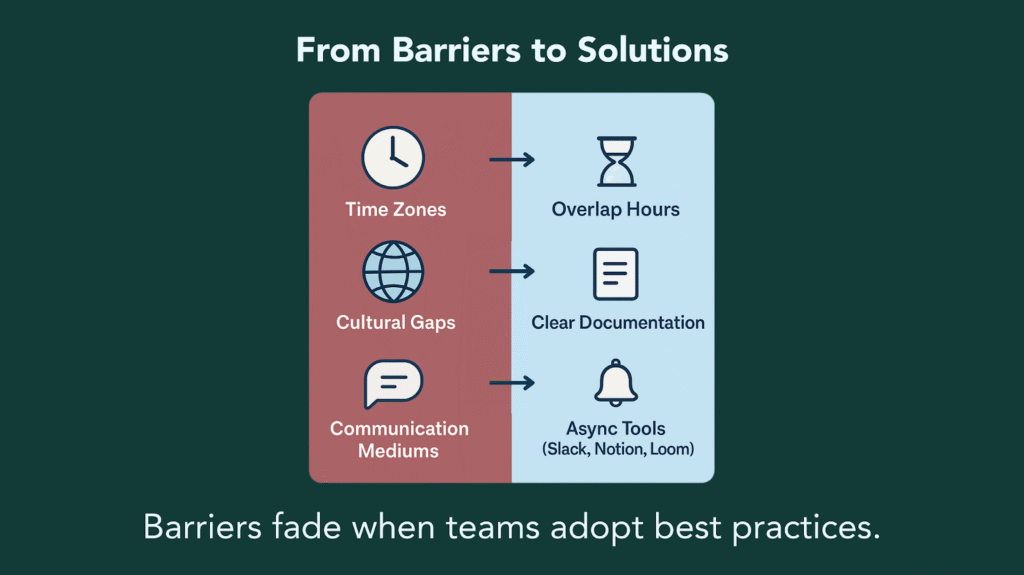
Sound familiar? Offshore teams face three common barriers:
- Time zones — delays in response can slow decision-making.
- Cultural differences — directness in one culture can sound rude in another.
- Medium mismatch — what feels fine on Zoom may feel too long in email or too vague in Slack.
Left unchecked, these barriers kill momentum.
2. Best Practices That Actually Work
Luckily, global pioneers like GitLab, Automattic, and Zapier have written the playbook. Here’s what works in the real world:
a) Document Everything
GitLab famously has a 2,000-page company handbook that’s public online. Why? Because when your team spans 60+ countries, assumptions won’t cut it. Clear documentation = fewer miscommunications.
b) Use Async First
Zapier runs with an “async-first” culture. That means fewer meetings, more Loom videos, Notion docs, and Slack threads. The idea: respect time zones, let people contribute on their schedule, and only meet live when absolutely necessary.
c) Create Overlapping Hours
Automattic recommends scheduling 2–3 “golden hours” where everyone’s workdays overlap. Even if your teams are oceans apart, those few hours are crucial for real-time syncs.
d) Over-Communicate (Nicely)
In global teams, silence often creates confusion. Strong leaders encourage repetition, summaries, and written recaps. It feels redundant—but it prevents misunderstandings later.
e) Build Human Connections
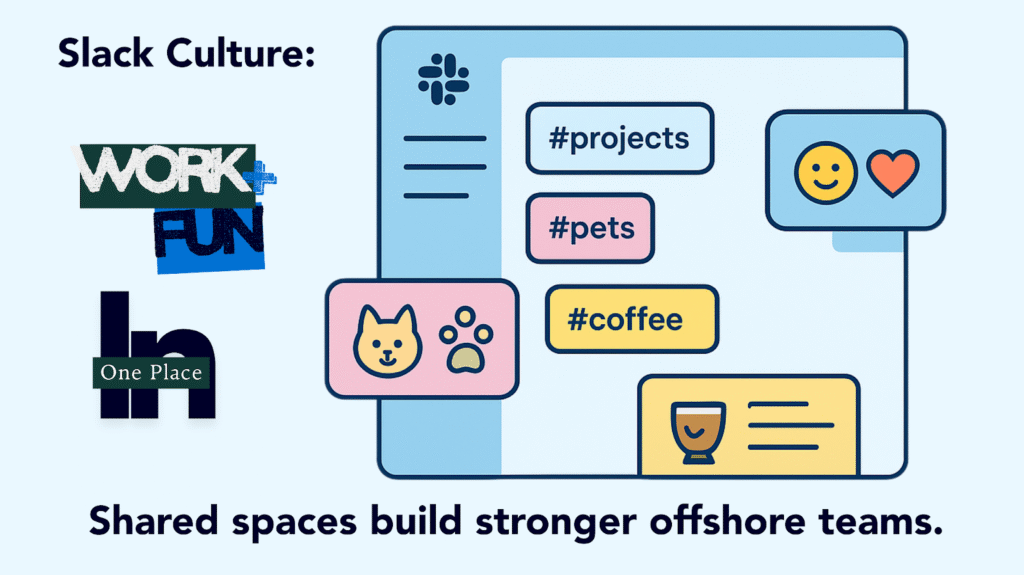
Slack isn’t just for tasks. GitLab and Automattic both encourage casual “coffee chats” or non-work channels (#pets, #music, #weekend-plans). Why? Because trust is built through relationships, not just checklists.
3. Real Stories: How Companies Got It Right
GitLab – Radical Transparency
GitLab’s success isn’t just about software—it’s about their communication culture. Their rule: if it isn’t documented, it doesn’t exist. This habit means any new hire, regardless of timezone, can ramp up without endless Zoom calls.
Zapier – Async Superpowers
Zapier ditched the idea of “meetings by default.” Most project updates happen through detailed written updates or Loom screen recordings. This lets a designer in Argentina and an engineer in Vietnam stay in sync without ever sharing a live call.
Automattic – Culture Without Borders
Automattic invests heavily in intentional communication. They host yearly in-person “Grand Meetups” and smaller team meetups to strengthen bonds. The result? Even though most of their communication is digital, the relationships feel real.
4. The Hidden Benefits of Overcoming Barriers
Once you master communication in offshore teams, something magical happens:
- Productivity skyrockets. Fewer misunderstandings = faster execution.
- Culture deepens. Teams feel connected, even when apart.
- Innovation thrives. Diverse perspectives lead to fresh solutions.
In other words: communication isn’t just a challenge—it’s an opportunity.
5. Practical Tips You Can Apply Today
Want to improve communication in your offshore team right now? Start here:
- Set tool rules: Slack for quick chats, email for external communication, Notion for documentation. No overlap, no confusion.
- Define response times: Agree on “expected turnaround windows” so no one’s left waiting in silence.
- Use visuals: A 30-second Loom recording can save 10 Slack messages.
- Celebrate small wins: Give shoutouts in group channels—it builds morale and visibility.
- Mind the language gap: Avoid slang or idioms (“let’s touch base offline”) that don’t translate well globally.
6. The Future of Offshore Teams
By 2030, Gartner predicts over 70% of global businesses will rely on offshore or hybrid teams. The companies that thrive won’t just be the ones who hire the best talent. They’ll be the ones who communicate the best.
Because when communication works, distance doesn’t matter.
Final Thought
Offshore teams don’t fail because of geography. They fail because of silence, confusion, and misalignment.
Get communication right, and your team in Dhaka, Lagos, Lisbon, and Los Angeles can feel like they’re sitting at the same table—even if that table only exists on Zoom.
So the next time someone asks, “Isn’t communication the hardest part of offshore teams?” you’ll know the answer: “Only if you let it be.”